
How to Budget for Building a House in St. Vincent and the Grenadines
9/28/2026 · 6 min read
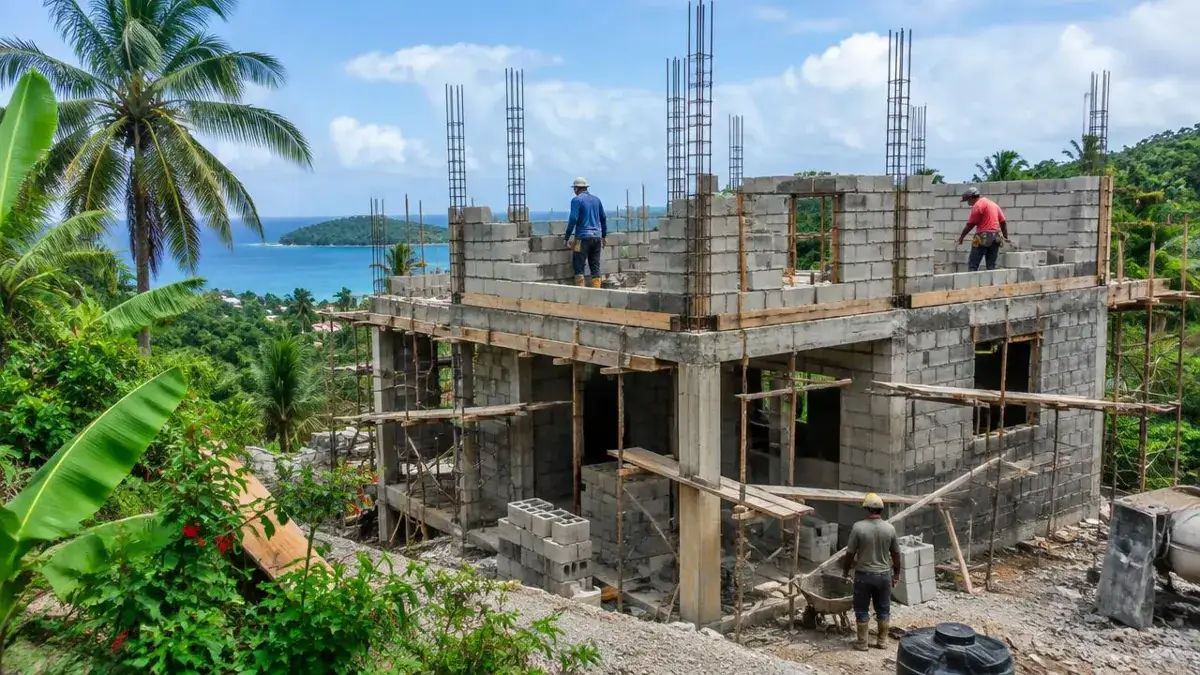
Building a home is one of the largest investments most families will make. In St. Vincent and the Grenadines, many projects run over budget or stall halfway, not because the owner was careless, but because the full cost was never properly worked out at the start. Here is how to plan a more realistic budget.
Start with proper drawings
A reliable budget starts with a clear design. Architectural drawings, and where needed structural drawings, define the size, layout, foundations, roof and finishes. Without them, any price is only a guess. Drawings are also needed for planning and building approval.
Understand all the cost categories
Owners often focus on blocks, steel and cement, but a complete budget should include:
- Professional fees: design, engineering, surveying and quantity surveying
- Approvals: planning and building permission fees and related requirements
- Site preparation: clearing, excavation, retaining walls and access
- Substructure: foundations and ground floor slab
- Superstructure: walls, columns, beams, suspended slabs and roof
- Finishes: plastering, tiling, painting, ceilings, doors and windows
- Services: plumbing, electrical, water storage, septic system and drainage
- External works: driveways, fencing, landscaping and retaining walls
- Contingency: an allowance for the unexpected
Get a Bill of Quantities
A Bill of Quantities (BoQ) measures every item of work in the drawings and prices it. It lets you compare contractors' prices on a like-for-like basis, spot items that have been left out, and track payments during construction. We explain this in more detail in our article on the importance of a Bill of Quantities.
Allow for price changes
Material prices in the Caribbean are affected by shipping costs, global markets and local demand. After disasters, demand for materials and labour can rise sharply. Keep your estimate up to date and consider buying key materials early if you have secure storage.
Build in a contingency
Every project meets surprises: poor ground, design changes, weather delays or price increases. A contingency allowance, agreed at the start, stops these from becoming a crisis. Your quantity surveyor can advise on a sensible allowance for your project.
Build in stages, but plan the whole
Many families build in phases as funds allow. That can work well, provided the whole house is designed and costed first, so that each stage fits the next and nothing has to be demolished or redone later.
Protect your payments
Pay for work that has been completed and checked, not in large advances. Regular valuations of work in progress, often required by banks for construction loans, help ensure you only pay for what has actually been built.
How BVQSS can help
We prepare cost estimates, Bills of Quantities and progress valuations for homeowners, banks and contractors. Get in touch before you start building so your budget is realistic from day one.